How to Prevent Heat Damage to Cargo in Shipping Containers
Extreme temperatures inside a shipping container can ruin pharmaceuticals, food, cosmetics, and electronics in transit. Here is how heat damage happens and the practical steps shippers use to stop it.
Joe Lam · Co-Founder
· 6 min read
Every summer, container ships moving cargo through the tropics create conditions that few shippers ever see coming. While the deck of a vessel sits in the open sun, metal containers absorb that heat and push interior temperatures far above anything the cargo would experience on the ground.
Understanding how and why this happens is the first step to protecting temperature-sensitive freight.
Why container temperatures get so extreme
A dark steel container sitting on a ship's deck in direct sunlight is effectively an oven. Studies of intermodal shipping consistently find interior container temperatures reaching 130–150°F (55–65°C) in tropical and summer routes, with steel interior walls and floor surfaces running even hotter than the air inside.
Three factors stack against you:
1. Solar gain. A sun-facing container wall can reach surface temperatures of 160°F or more. Cargo stowed against that wall is exposed to sustained conductive heat.
2. The diurnal cycle. Daytime heating followed by cool nights drives moisture cycling inside the container — which is also why heat damage and moisture damage so often appear together.
3. Long exposure. A trans-Pacific or trans-Atlantic crossing means days of repeated heat cycling, not hours. There is no "getting through it quickly."
What heat damage actually looks like
Heat damage is not always dramatic melting. More often it shows up as:
- Pharmaceuticals drifting out of specified storage ranges, making entire lots unsellable
- Chocolate, confectionery, and gummies blooming, melting, and re-solidifying into unusable form
- Cosmetics separating, discoloring, or breaking emulsion
- Electronics suffering solder-joint stress and condensation corrosion
- Packaged foods losing texture, color, and shelf life
- Adhesives, chemicals, and polymers curing, separating, or degrading prematurely
The common thread: by the time a receiver documents the damage at destination, the excursion happened days earlier at sea. Prevention has to happen before the container doors close.
Seven ways to protect cargo from heat
1. Know your product's temperature limits
Start with the actual stability data, not assumptions. A product stable at 77°F (25°C) for a week is a different shipping problem than one that fails after a single afternoon at 95°F. Define the acceptable excursion window — maximum temperature and cumulative duration — before choosing protection.
2. Choose the right lane and season
Where possible, avoid stacking a heat-sensitive shipment onto a summer trans-tropic sailing. Seasonal routing and vessel selection with under-deck stowage for sensitive boxes can materially reduce peak exposure.
3. Use thermal container liners
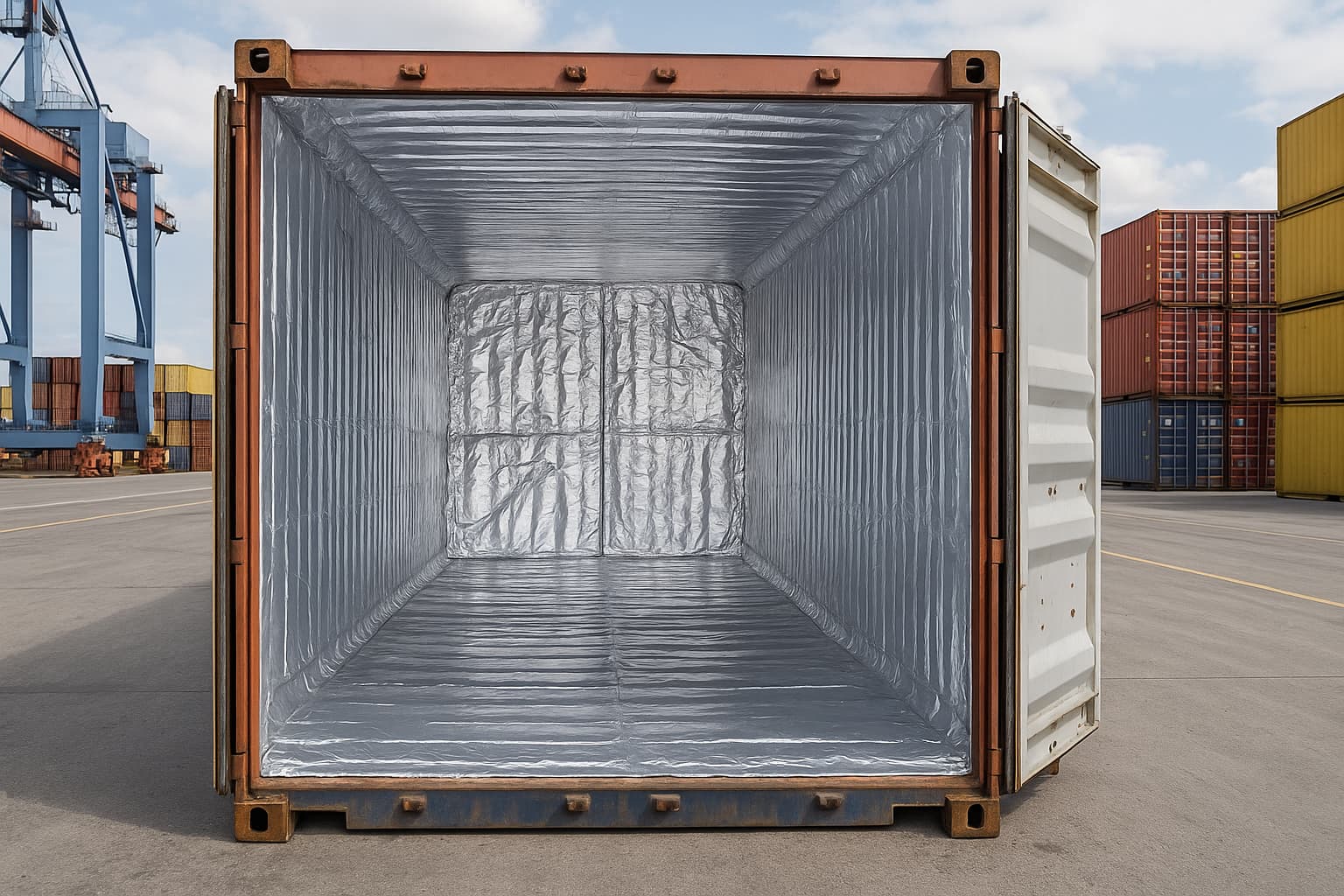
A thermal container liner is a fitted insulation layer placed inside a standard 20- or 40-foot container before loading. It slows heat transfer through the container walls, keeping interior temperatures stable despite extreme swings outside. For shippers moving palletized temperature-sensitive goods without paying for a refrigerated container, liners are the most cost-effective barrier available — and unlike reefers, they work on any standard container and any lane.
4. Add desiccants to fight moisture
Heat cycles drive condensation, and condensation ruins packaging, labels, and product surfaces. Container desiccant strips absorb the moisture released and absorbed during each heat cycle. Combine them with any thermal protection strategy.
5. Protect the pallets themselves
Pallet covers and blankets add an insulation layer at the unit level. This matters most when cargo leaves the container — during drayage, transloading, and warehouse staging — when the container's protection is gone.
6. Watch the floor and walls during loading
Leave airflow gaps between cargo and container walls where possible, and avoid loading product tight against sun-facing steel. Simple load-planning discipline reduces hot-spot exposure.
7. Monitor so you can prove it
Temperature data loggers inside the container turn a mystery excursion into documented data. Shippers who can show a stable temperature record resolve claims faster and win more temperature-sensitive business.
Thermal liners vs. refrigerated containers
Reefer containers actively hold a set temperature and are the right tool for frozen and strict cold-chain cargo. But they cost substantially more than a dry container, require power at every handoff, and are often simply unavailable in peak season.
Thermal container liners work with standard dry containers, need no power, cannot fail electrically, and are reusable across many shipments. For cargo that needs protection from heat extremes rather than active cooling — most shelf-stable food, cosmetics, many pharmaceuticals in ambient-grade packaging, chemicals, and electronics — a liner delivers the protection at a fraction of the cost.
The takeaway
Heat damage is predictable, and it is preventable. Know your product's limits, route smart, insulate the container, control moisture, and document the conditions. Shippers who do these four things consistently stop losing product to transit heat — and stop paying for it twice in damaged goods and lost customers.
If you are moving temperature-sensitive freight and want a practical assessment of your lane, our team can help you choose between thermal container liners, pallet covers, and active refrigeration based on your product and budget.
Frequently asked questions
How hot does a shipping container get in transit?
Interior air temperatures of 130–150°F (55–65°C) are routinely recorded in containers on decks during summer and tropical sailings, with interior wall surfaces running hotter still.
Are thermal container liners reusable?
Yes. Quality thermal container liners are built for multiple voyages and, with basic handling care, can be reused across many shipments, which lowers the per-shipment cost further.
When should I use a reefer instead of a thermal liner?
Use a refrigerated container when cargo requires active cooling or freezing, such as frozen foods or strict 2–8°C pharmaceuticals. Use a thermal liner when the product needs protection from heat extremes while staying at ambient temperature.
Do I still need desiccants with a thermal liner?
In most cases, yes. Insulation moderates temperature swings, and desiccants absorb the moisture that daily heat cycling drives into and out of the cargo, protecting packaging and product surfaces.